
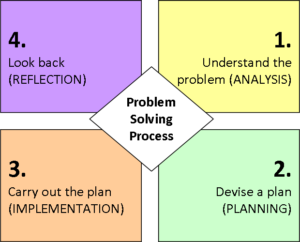
Problem Solving Training Program

Problem-solving training in a factory environment provides significant advantages that enhance overall operations and productivity. By equipping factory personnel with problem-solving skills and techniques, they can effectively identify, analyze, and resolve challenges that arise during their work.

Problem-solving training helps employees become more proactive and efficient in addressing issues, reducing downtime and minimizing disruptions to production. By fostering a problem-solving mindset, factory personnel can tackle challenges with confidence, leading to quicker resolutions and improved decision-making.

Additionally, problem-solving training encourages teamwork and collaboration. When employees work together to solve problems, they can leverage diverse perspectives and expertise, leading to more innovative and effective solutions.

Moreover, problem-solving skills lead to a more engaged and empowered workforce. Employees feel more confident in their ability to handle challenges, which boosts morale and job satisfaction. As a result, a positive work culture is cultivated, leading to improved employee retention and loyalty.

Topics Covered in the Training Program
  1. Introduction to Problem-Solving: This topic would provide an overview of the problem-solving process and its importance in a factory setting. Participants would learn about the different types of problems encountered in their work and understand the value of proactive and systematic approaches to addressing them.

  2. Root Cause Analysis: Root cause analysis is a critical problem-solving technique that helps identify the underlying reasons behind issues. This topic would teach factory personnel how to use tools like the 5 Whys and fishbone diagrams to delve deeper into problems and find their root causes accurately.

  3. Data Collection and Analysis: Effective problem-solving requires gathering relevant data and analyzing it to make informed decisions. This topic would cover methods for data collection, organizing data, and using basic statistical techniques to draw meaningful insights for problem-solving purposes.

  4. Creative Thinking and Brainstorming: Creative thinking is essential for generating innovative solutions to complex problems. This topic would introduce creative thinking techniques, such as brainstorming and mind mapping, to encourage factory personnel to explore a wide range of ideas and possibilities.

  5. Decision-Making Strategies: Once potential solutions are identified, decision-making becomes crucial. This topic would explore decision-making models, such as the rational decision-making process or decision matrices, to help participants evaluate and choose the best course of action for solving specific problems.

  6. Implementing and Evaluating Solutions: Problem-solving does not end with identifying solutions; successful implementation and evaluation are equally vital. This topic would cover the process of implementing chosen solutions, monitoring their effectiveness, and making necessary adjustments if needed.

To book the Training Program - Call 8307053600 or Email: amunjal@mentormate.in
Scroll to Top